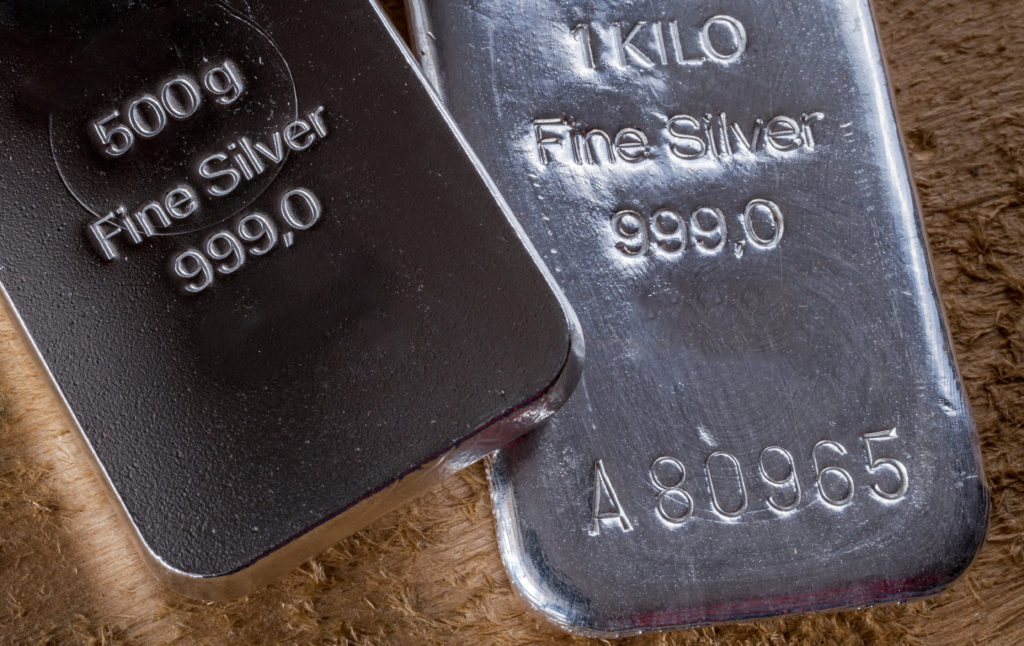
Silver price crashed into sea!
Is it the right time to enter or should wealth builders bolt for the exit? On 30 January 2026, silver price plunged 31%, falling from a record high of US$120 per troy ounce to US$85 per troy ounce. The stunning reversal of silver price caught many investors by surprise as silver price has been on a relentless form for the past one year, surging by an incredible 4-fold to smash a record high of US$120 per troy ounce on 29 January 2026.
Obviously, what goes up will come down. The rapid decline of silver price vindicated my belief that big boys have been manipulating the market. Although I am convinced at the long-term potential of gold and silver as safe haven, I am skeptical of silver price’s recent explosive runs. This is the reason why I have not entered the market till now.

Despite the meltdown of silver price, my conviction is that its historic rallies were justified by geopolitical conflicts and that any pullbacks would be healthy to avoid excessive bubble. But that does not explain the rationale for the supersonic rally of silver price for the past 1 year. In this article, I will share my insights on some of the potential root causes for triggering the interest from big boys to punt silver.
Silver price squeeze
The silver price squeeze in 2025 was driven largely by fears of US Donald Trump imposing tariffs on the import of silver. That fear has caused some suppliers to withhold silver supplies in their warehouses. The fear is real as unlike gold, silver is extensively used for industrial purposes – EV, solar panels and AI data centers. Any tariffs imposed by US government on silver could cause even more damage to the already strained supply chain system. The resulting squeeze in the supply of physical silver led to a surge in the paper market as silver price rocketed from US$30 per troy ounce in early 2025 to US$70 per troy ounce by end of December 2025.
The threat of tariffs on silver, coupled with US’ capture of Venezuela President, has driven silver price to further record highs in early 2026. However, silver priced tumbled 7.3 percent on 15 January 2026 following US President Donald Trump announcing that he would pause tariffs on silver for now, and would negotiate with foreign countries to ensure sufficient critical minerals for US supply chain instead. Nonetheless, the policy reversal did not really dampen the bullish form of silver price until the crash on 30 January 2026.
Question now is whether the crash is the start of a bubble burst or a healthy pull-back. Based on my macroeconomic assessment, all signs point to the latter. According to the Silver Institute, total supply of silver from mining production has peaked in 2016, resulting in “structural deficit” for the past 5 years – total demand outstripped total supply in the silver market.
Much of silver demands are driven in part by the development of AI infrastructure due to silver’s physical attributes (high thermal and electrical conductivity). AI data centers require massive amounts of silver for high-performance GPUs, servers and connectors. As Big Tech companies pour billions of dollars into building AI data centers, the industrial demands for silver are expected to increase exponentially. For example, the electrical and electronics industrial demand for silver has surged from 350 million ounces in 2021 to 460 million ounces in 2024. Silver price correlation to gold
Silver price has a strong positive correlation to gold price as investors tend to rotate into silver when gold becomes too expensive. However, due to its lower prices, silver price tends to rise and fall more violently than gold price. The recent correction is an example – silver price collapsed 31% while gold dropped 12%.
The support of gold price is largely attributed to central bank’s purchases. Many central banks in the world purchase gold as reserves to hedge against uncertainties. So far, I am not aware of any government that buy silver and store as national reserves.
According to Gold Focus 2025, central bank purchases averaged a staggering 784 tonnes. Among them, the People Bank of China (PBOC) has been consistently buying gold for 14 consecutive month as of December 2025.
Over at MAS, the central bank has increased the volume of gold held in our national reserves from 4.94 million troy ounces in December 2022 to 7.741 million troy ounces in April 2024. That was when gold price started its super bull run as it surged from US$2,378 to the current US$4,860 per troy ounce. Since April 2024, MAS has been trimming its gold reserves. As at November 2025, the amount of gold reserves has been reduced to 6.58 million troy ounces.
Back of the envelope calculation showed that MAS has made a profit of about S$2.7 billion of profit from the buying and selling of gold. Generally speaking, the MAS is very discreet when it comes to gold buying as it does not make any public announcements over the years. As such, the average gold prices at which the MAS had entered could not be accurately determined. Even though I doubt that the regulator had bought at the lowest prices, the fact that gold price had rocketed after the MAS’ buying vindicated that the purchases were very, very shrewd.
MAS’s strategy for gold is to buy low and sell high. The data for December gold reserves has not been released but I am inclined to believe that MAS has trimmed the amount of gold reserves.
One of the major factors for causing gold price to rocket is the US trade tariffs. During the onset of China-US trade war in 2018, gold price has a massive rally. Prior to that, gold had remained stagnant between US$1,100 and US$1,400 for five years. In 2018, U.S. imposed 25% tariffs on steel and 10% tariffs on aluminium imports from most countries, citing national security concerns. US also slapped 25% tariffs on US$34 billion worth of Chinese imports, focusing on machinery, electronics, and auto parts and another 25% tariff on US$16 billion in Chinese goods, targeting semiconductors and chemicals.
Conclusion
The recent collapse of silver price could be a knee jerk reaction to the appointment of a new US Federal Reserves Chairman. Fundamentally, the long term prospect of silver and gold remains intact due to ongoing geopolitical uncertainties. Hence, I view the latest correct pull-back as healthy. Just imagine silver price moving non-stop at the current rate. That will surely create a massive bubble awaiting to burst.
My overall view of silver is that it is more for trading purpose. As a wealth builder, I think it is important to keep an open mind and have a diversified portfolio comprising of growth and value assets. This is the reason why I am looking at SPDR Gold ETF recently and BullionStar Savings Program (BSP).
In Singapore, two of the most bullion dealers are BullionStar and UOB. The main advantage of BullionStar’s (BSP) is the opportunity to convert your silver and gold savings to physical bullion bars, produced by LBMA refineries, at any time without any extra cost whatsoever. The problem with BullionStar’s BSP is that it could not be bought using SRS. As I am looking to diversify my SRS portfolio, SPDR Gold ETF looks like a viable option to slowly accumulate gold shares that are backed by physical gold.
On the other hand, BullionStar’s BSP (Silver) is accessible for investors just starting out in their investment journey. For just $4.326, you can buy 1 gram of allocated silver. Take note that there is storage fee of 0.19% per year and 19.79% of spread when you sell back the silver to BullionStar. As such, you need to factor in these costs before you purchased BullionStar BSP. I am of the view that the correction of silver price should continue till US$60 to $65 per troy ounce range bound in 2026. This is a reasonable price range for me to enter the silver market. Till then, enjoy the ride.
Discover more from SG Wealth Builder
Subscribe to get the latest posts sent to your email.


