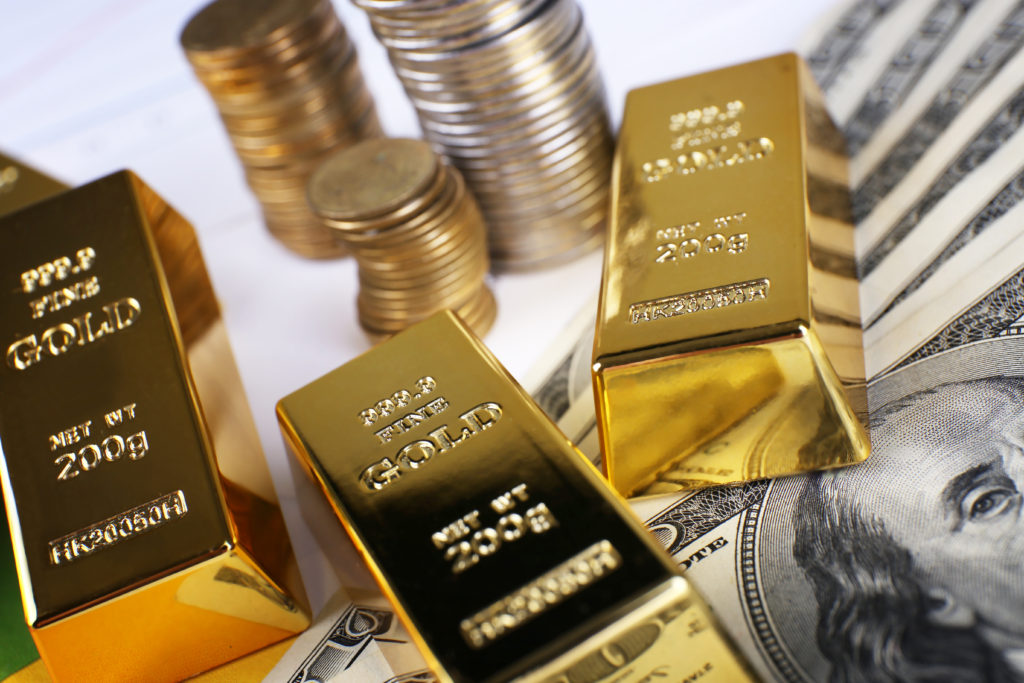
Gold price ambushed!
All hell broke loose for gold price! Following the ignite of US-Israel war on Iran, gold price plunged from a high of US$5,400 per troy ounce on 2 March to a low of US$4,200 on 23 March. The volatility of gold price must have shaken investors. At the same time, the correction of gold price is intriguing as the precious metal tends to rally during war time due to its status as safe haven. What could have triggered the ambush of gold price?
In my opinion, a number of factors could be behind the recent correction of gold price. Firstly, the Iran war has led to a spike in oil price due to the closure of Strait of Hormuz disrupting oil supply. As a result, there are widespread fear that the resulting spike in inflation might lead to central banks halting or even hiking interest rate cuts to fight inflation. Rising interest rates tend to cause gold price to drop as gold does not yield interest.

Secondly, gold yield no interest. As US dollar surges due to investors rushing to buy Treasury, the global demand for gold tends to dampen, which causes gold price to drop.
Another reason for the drop in gold could be margin calls faced by the big players. Arising from the market turmoil, some of the investors might have incurred losses in other investments like stocks or leveraged oil bets, thereby leading them to sell their gold holdings. Some of them might also want to take profit as gold price has risen by 47.8% within a year.
Whatever the case it may be, the recent correction in gold price could be an opportunity for investors who believe in gold to buy on the dip. Incidentally, the recent volatility also takes place at a time when Singapore government announced plans to develop Singapore as a gold trading hub.
Will Singapore succeed on the 2nd attempt?
Looking back, it is not the first time that the authorities attempt to develop Singapore into a gold trading hub. In 2012, Singapore announced the removal of GST for investment grade gold. That move has attracted retail players and high net worth individuals, fuelling BullionStar and The FreePort. But it didn’t’ achieve the status of London gold trading market due to the lack of centralized clearing system and large-scale liquidity.
And then, some of the senior folks would remember SGX’s ill-fated gold kilobar. Back in October 2014, SGX launched the kilobar gold contract to create a “world-first” physically delivered wholesale gold contract. However, it turned out to be a major flop that SGX has to suspend and removed the kilobar gold contract on March 19, 2018.
Some of the key lessons were that SGX had inadvertently made this product exclusive for the big players. Not many retail players can afford to fork out $1.35 million and there are not many gold buyers who are interested in buying 25 kilobars of gold, especially in a small market like Singapore.
SGX revealed that the SGX Kilobar Gold contract recorded a shocking zero trading volume in February 2016, and only 1 contract in January 2016. Perhaps the root cause is the complex process involved in the opening of account, delivery of the contract, limited product brands (only 17) and the trading hours. Also, the contracts were quoted in US dollars, so investors need to factor in the risk of currency exchange rates as well.
Most gold buyers prefer a simple and straightforward process of buying and storing their gold or silver in vaults. If the process is too rigid and complicated, most buyers will be too turned off to even consider buying the SGX Kilobar Gold contract.
Gold price hike ignited gold hub dream?
Details of the authorities’ plan to develop Singapore into a gold trading hub are vague. What I see is that the MAS is looking at building an ecosystem that allows for institutional players to trade gold and enables efficient price discovery. The authorities are also looking at vaulting services for foreign central banks and sovereign wealth funds to store their gold.
To implement the plan, the MAS has formed a working group which includes all three local banks, vault operators, trading houses, retailers, refinery (Metalor Technologies Singapore) and Enterprise Singapore. I am not surprised that Metalor Technologies Singapore is among the working group as the company is the first and only LBMA refinery in Singapore. Established in Singapore in 2013, Metalor Technologies Singapore will play a key role in Singapore’s bid to become a key regional gold trading hub.
What surprised me is that BullionStar is not part of the working group. Instead, retailers like Silver Bullion and the Singapore Mint form the representation from the retailer group. The leading e-commerce precious metals retailer was one of the first to set up shop in Singapore after the government removed GST for investment grade precious metals in 2012.
The bullion retail landscape in Singapore is challenging due to the small market size. Back in October 2012, the removal of GST for investment grade precious metals ignited interest among bullion dealers to sell gold and silver in Singapore, with new entrants seeking to gain market share. Among them was BullionStar’s founder, Torgny Persson, a Swedish entrepreneur.
In its early days, BullionStar specialised in online sales, so the office in Marina Bay Financial Centre was a modest outfit. Despite starting small, it was clear to me that Torgny had big ambitions as BullionStar grew quickly to become one of the largest bullion dealers in Singapore within a few years. A major milestone arrived in 2014 when the company opened its first retail shop at 45 New Bridge Road.
Resilient gold demand from central banks
A key driver of gold price comes from the resilient gold demand from central banks. According to Gold Focus 2025, central bank purchases averaged a staggering 784 tonnes. Among them, the People Bank of China (PBOC) has been consistently buying gold for 14 consecutive months as of December 2025.
Over at MAS, the central bank has increased the volume of gold held in our national reserves from 4.94 million troy ounces in December 2022 to 7.741 million troy ounces in April 2024. That was when gold price started its super bull run as it surged from US$2,378 to the current US$4,860 per troy ounce. Since April 2024, MAS has been trimming its gold reserves. As at February 2026, the amount of gold reserves has been reduced to 6.23 million troy ounces.
Generally speaking, the MAS is very discreet when it comes to gold buying as it does not make any public announcements over the years. As such, the average gold prices at which the MAS had entered could not be accurately determined. Even though I doubt that the regulator had bought at the lowest prices, the fact that gold price had rocketed after the MAS’ buying vindicated that the purchases were very, very shrewd.
MAS’s strategy for gold is to buy low and sell high. The data for gold reserves showed MAS has trimmed the amount of gold reserves to take profit. In late 2025, the central banks sold 15 tonnes of gold as gold price smashed to record highs in early 2026.
One of the major factors for causing gold to rocket is the US trade tariffs. During the onset of China-US trade war in 2018, gold price has a massive rally. Prior to that, gold had remained stagnant between US$1,100 and US$1,400 for five years. In 2018, U.S. imposed 25% tariffs on steel and 10% tariffs on aluminium imports from most countries, citing national security concerns. US also slapped 25% tariffs on US$34 billion worth of Chinese imports, focusing on machinery, electronics, and auto parts and another 25% tariff on US$16 billion in Chinese goods, targeting semiconductors and chemicals.
Conclusion
The recent correction in gold price is largely driven by inflation fears due to the conflicts in Middle East. However, I do think that the war will likely to end soon given the wide implications to global economy. But what is unlikely to go away soon is the US trade tariffs, which is likely to provide support to gold price.
In Singapore, two of the most bullion dealers are BullionStar and UOB. The main advantage of BullionStar’s (BSP) is the opportunity to convert your gold savings to physical bullion bars, produced by LBMA refineries, at any time without any extra cost whatsoever. The problem with BullionStar’s BSP is that it could not be bought using SRS. As I am looking to diversify my SRS portfolio, SPDR Gold ETF looks like a viable option to slowly accumulate gold shares that are backed by physical gold. Till then, enjoy the ride.
Discover more from SG Wealth Builder
Subscribe to get the latest posts sent to your email.


