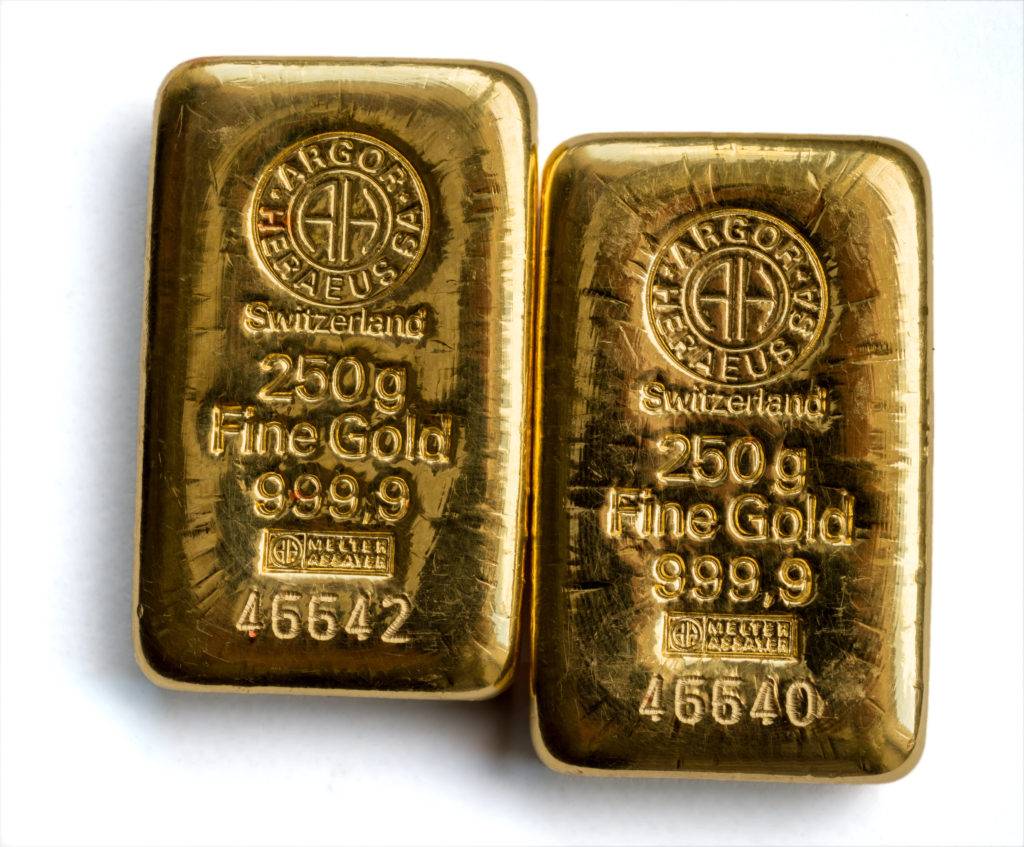
Singapore’s gold-hub push amid gold price drop
Be careful of what you wish for. When gold price was super bullish in early 2026, buyers lamented that the yellow metal was too expensive to buy and many waited for the correction to come before entering the market. Since 30 January 2026, gold price has plunged from US$5,500 per ounce to the current US$4,300. I wonder if this same group of buyers are loading up precious metals before the next tide of wave arrives.
Notwithstanding the gold price correction, Singapore government has unveiled its ambition to become the regional hub for trading and storing gold. The move came amid growing interest for bullion across Asia. Geopolitical uncertainties also led to central banks seeking safe locations to store their gold reserves.

Singapore is well-positioned to become a regional gold hub due to its longstanding reputation as a safe country with strong rule of law and political neutrality. In 2010, Singapore has also opened the Le Freeport, touted to be Asia’s Fort Knox. Le Freeport is a high-security storage facility that is located near Changi Airport. Offering secure storage for high-net worth individuals to store their fine arts, precious metals and collectibles, Le Freeport should be the centre-piece of Singapore government’s push to become a regional gold hub.
The government’s goal to become gold hub did not stop as just merely being the ideal choice of place to store gold. Instead, the game plan is for Singapore to become a trading hub for central banks to actively manage their asset reserves via over-the-counter trading framework. On 15 June 2026, DBS, OCBC and UOB signed the Memorandum of Understanding (MOU) with SGX to become the founding clearing members for an over-the-counter (OTC) gold clearing system designed to standardize physical gold settlement (for both 400 oz large bars and 1 kg kilobars). SGX plans to complete the technical clearing infrastructure by late 2026, with interbank trading and clearing activity officially ramping up in 2027. Traditionally, UOB has been the go-to retailer for investors to buy gold. With DBS and OCBC jumping onto the bandwagon to offer gold trading services, the ecosystem is set to become more vibrant in Singapore.
Gold ambition despite gold price fluctuations
Given that Singapore is pushing to be a regional gold hub despite the recent meltdown in gold price, it is clear that the government is aiming to be Asia’s premier gold trading and storage hub. Hence, the country should be agnostic to short-term fluctuations in gold price. This long-term strategic move could be to address two major gaps in this sector.
Traditionally, Asia dominates the physical gold demand due to historically demands from China and India. These 2 countries, coupled with the rest of Asia, accounted for nearly 70% of total global annual consumer gold demand. However, the global benchmark for gold is the “spot price”, which is set by the London Bullion Market Association (LBMA) in England and Chicago Mercantile Exchange (CME) in US.
This means that while Asia consumes gold, the western financial markets set gold price. This creates a liquidity gap during Asia trading hours which Singapore could exploit if it becomes a regional gold trading centre.
Secondly, to support the goal in becoming a gold trading hub, Singapore is developing the infrastructure. Metalor, a major LBMA-accredited gold refinery, has established its high-tech refining facility in Singapore since 2014. With Metalor working alongside with Le Freeport and The Reserve for vaulting services, Singapore only lacks the OTC clearing system. Thus, Singapore is not miles away from becoming a regional gold trading hub. In fact, with the upcoming “Loco Singapore” OTC clearing system, Singapore is well-positioned to be a leading player in this region.
MAS ramping up gold reserves
Among the central banks, Singapore’s MAS appears to buck the trend as it adopts a contrarian approach when it comes to accumulating gold as part of national reserves. MAS’s strategy for gold is to buy low and sell high.
Prior to the rally of gold price on 2025, MAS had been buying gold until April 2024 when it held a record 7.741 million troy ounces in our reserves. That was when gold price started its super bull run as it surged from US$2,378 to the current US$4,347. Since April 2024, MAS has been trimming its gold reserves. When gold prices soared in 2025, MAS started to trim the amount to a low of 6.23 million troy ounces in early 2026. Consequently, data released by MAS showed that the central bank has started to accumulate again as Singapore gold reserves climbed to 6.54 million troy ounces recently.
Generally speaking, the MAS is very discreet when it comes to gold buying as it does not make any public announcements over the years. As such, the average gold prices at which the MAS had entered could not be determined. Even though I doubt that the regulator had bought at the lowest prices, the fact that gold price had rocketed after the MAS’ buying vindicated that the purchases were very, very shrewd.
One of the major factors for causing gold price to rocket in recent years is the US trade tariffs. During the onset of China-US trade war in 2018, gold price has a massive rally. Prior to that, gold had remained stagnant between US$1,100 and US$1,400 for five years. In 2018, U.S. imposed 25% tariffs on steel and 10% tariffs on aluminium imports from most countries, citing national security concerns. US also slapped 25% tariffs on US$34 billion worth of Chinese imports, focusing on machinery, electronics, and auto parts and another 25% tariff on US$16 billion in Chinese goods, targeting semiconductors and chemicals.
Donald Trump’s second stint as US President has heralded sweeping trade tariffs as central of his foreign policy. Goods from all countries to US are subjected to baseline tariffs of 10%. Countries are also subjected to reciprocal tariffs, subjected to negotiations between US and various countries.
Conclusion
No doubt about it. Gold price has witnessed an extraordinary volatility in 2026 – from a bullish trend in early 2026 to a hellish plunge in the second quarter. The roller-coaster form of gold price is indeed gut-wrenching. At such level, it certainly requires someone with strong conviction in gold to buy gold.
Amid the volatile gold price, I am excited that Singapore is taking steps to become a regional gold trading hub. With this development, I foresee that there will be more precious metal product offerings for retail investors. At the moment, if you are buying physical gold, make sure to buy from a reputable bullion dealer.
In Singapore, one of the most popular bullion dealers is BullionStar. The main advantage of BullionStar’s (BSP) is the opportunity to convert your gold savings to physical bullion bars, produced by LBMA refineries, at any time without any extra cost whatsoever. Till then, enjoy the ride.
Discover more from SG Wealth Builder
Subscribe to get the latest posts sent to your email.


